What almost 90 years of buildings can teach us about the ones we are still planning.
By Manik Jethi, Indian City Properties
“Good design is actually a lot harder to notice than poor design, in part because good designs fit our needs so well that the design is invisible.”
Donald A. Norman, The Design of Everyday Things
There are some weeks when I visit one of our heritage properties in the morning, spend the afternoon in an office we completed a few years ago, and end the day looking at drawings for something that has not been built yet. The first was built for a very different time. The second is busy with today’s work: teams at their desks and systems running. The third is still being planned and discussed. What I notice each time is simple: the oldest of the three does not feel old at all. It performs better than its years would suggest, largely because of design choices that most people never notice.
Since ICP began building in 1939, we have learned a great deal from our own portfolio. The choices have worked well across decades: higher ceilings that let spaces adapt, natural light that reaches deep into offices, and lobbies and shared areas that people use. Other choices were more closely tied to their moment, and with hindsight we would approach them differently today. That long experience gives us practical knowledge, and every project continues to teach us something new.
Buildings that last are not designed only for the present moment. They are designed for the full life of the building. They remain useful because they are based on clear principles about how people use space. So, when people ask what good design means, my simple answer is this: it is the decisions that will still help someone twenty years from now, even though the people who made those decisions may not be there to see it.
Seen this way, architecture is less about how a building looks and more about a promise made in advance to people we may never meet. When we decide where the lifts should be, we affect how long someone waits on a busy morning. When we decide how wide the drop-off area should be, we affect whether a visitor reaches a meeting comfortably during the monsoon. These details may not appear in a brochure, but they affect whether a tenant is happy to stay.
That is why I am careful when people use the word “aesthetics” to mean only decoration. People usually value buildings not because they have expensive design features, but because the everyday things work well: light reaches the centre of the floor, the air still feels right at three in the afternoon in May, and the space is easy to use.
Between what looks good and what works lies the gap I would most like to close. We spend a lot of energy on things that look good in photographs, while tenants experience the things that happen every day. Norman’s point is true here: the building you stop noticing is often the building that is working well.
Nobody has ever renewed a lease because of a façade. People renew because the lifts worked well through the busy summer months, because visitors were treated properly at the security desk, and because help was available when it was needed. These results come from simple design decisions: enough lifts, clear service routes, and a reception area with enough space to work properly. They also depend on the people who keep those systems running long after the drawings are filed away.
Those everyday details also have a commercial side. Earlier, design was often seen as a cost that had to be justified by belief. Today, the market makes the value much clearer. According to CBRE, India saw a record 45.5 million square feet of office space taken up in the first half of 2026. About seven-tenths of that space went into buildings less than ten years old, and nearly three-quarters into green-certified buildings. These numbers tell us something important: the market is not only choosing better buildings; it is also leaving weaker buildings behind. A property does not have to become bad to become difficult to lease. It only has to become the second-best choice.
Design is one of the main ways we can keep a building useful for longer. A floor plate that can be divided and changed over time can handle many years of tenant changes. A rigid one cannot do this as easily.
The value then appears in simple business terms. Good buildings lease faster because more people want them. They keep tenants for longer, and renewals are usually the most cost-effective leasing for any owner. They also cost less to run, because efficiency built into the design reduces future energy costs. And they usually hold value better at sale, because the next buyer is also looking at the building’s future life.
If you are choosing office space, look at the building during normal busy hours. Visit at 9:30 on a Monday morning, not at 3:00 on a quiet afternoon. Stand in the lobby and see how it handles a crowd. Walk from the parking area to the workspace and time it, because your teams will make that walk twice a day for the next five years. Also ask what the building will need to do ten years from now, not only what it did five years ago.
Also see how the building works for different users. Think about someone using a wheelchair, a visitor who cannot easily read the signs, or a driver waiting outside in the heat. Check for step-free routes, lifts that announce floors, and signs that are easy to follow without asking for help. This is not just compliance. It shows how carefully the building has been planned, and it is very difficult to add later.
The first is sustainability. Earlier, I saw it as an extra cost that ended with a certificate. Now I see it clearly as part of leasing value. Many occupiers have their own reporting commitments. If a building cannot help them meet those commitments, it may not even reach the first site visit.
The second is that I no longer fully trust predictions about how people will work. Many confident forecasts in recent years have had to change. What has worked best is not trying to predict everything, but leaving enough flexibility: floors that can be divided in different ways, services with enough capacity, and spaces that can change use without major demolition. Often, the best decision in a project is the space we leave for future decisions we cannot make today.
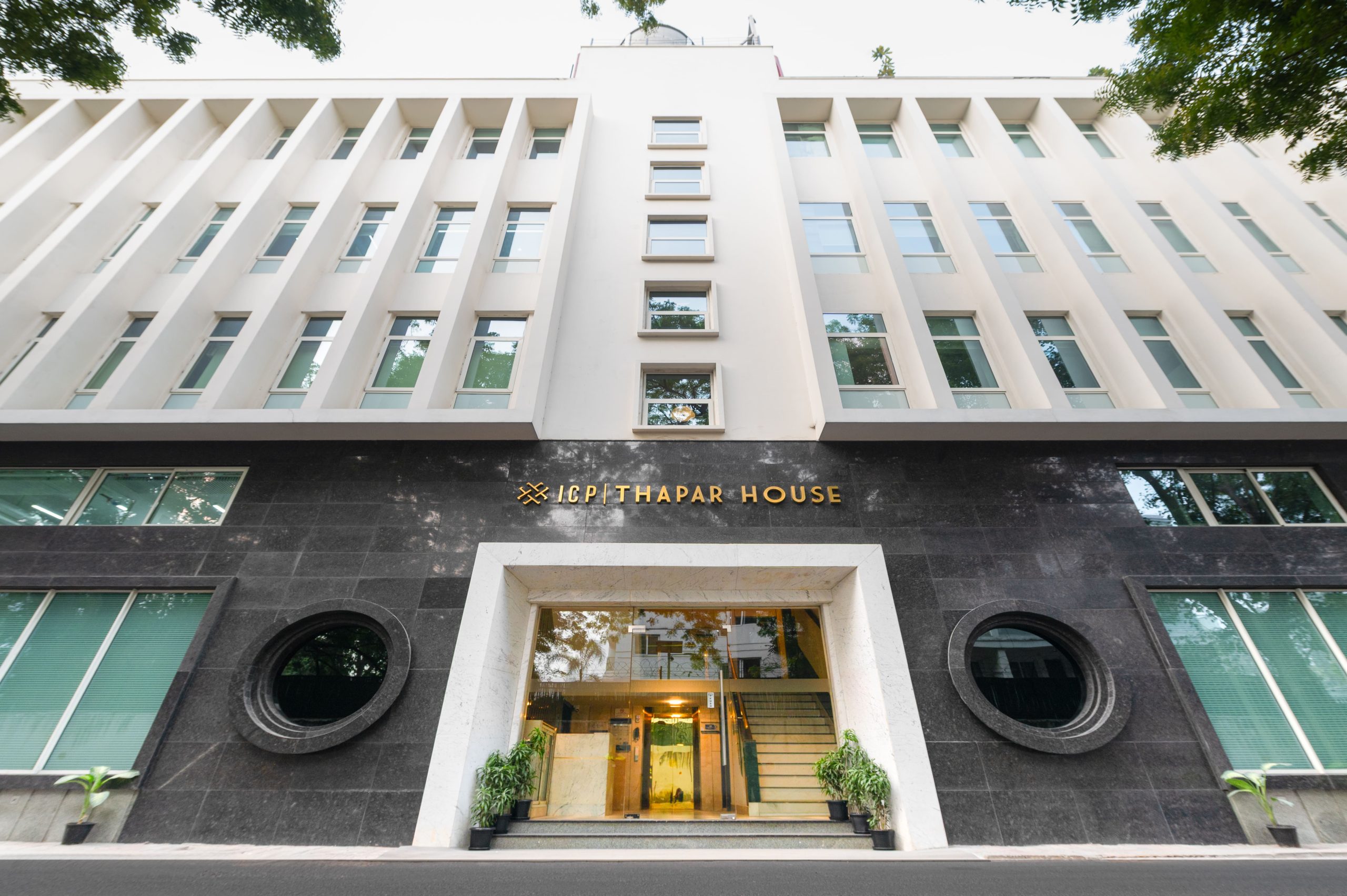
The third is heritage. I used to see our older buildings mainly as a limitation, a list of things we could not do. Over time, they have become our best teachers. The most valuable parts are usually not decoration. They are the proportions, the light, the air, and a layout that simply works.
Buildings do not last because someone guessed the future correctly. They last because they stayed useful, and because someone continued to care for them.
That is the standard we try to follow, whether a building was completed last year, completed before Independence, or is still only a drawing. It is also the standard I would ask you to use when judging us: not only how a building looks on the day you sign, but how it works on an ordinary Tuesday, when no one is trying to impress anyone.